AI for Car Dealerships: Practical Use Cases and Benefits

Answering Your Question Fast: What AI Can Do for Car Dealerships Today
AI for car dealerships means a suite of practical tools working around the clock—from AI chatbots answering customer questions at 2 AM, to inventory optimisers that flag ageing stock before it drains profit, to smartphone apps that capture 360° vehicle photos in minutes instead of hours. This isn’t theoretical technology anymore; it’s live in thousands of dealerships across North America and Europe right now.
Here’s what AI tools are actually doing for automotive dealers today:
- Lead handling and qualification: AI agents respond to leads from Autotrader, Cars.com, and website forms within seconds, asking budget questions and booking appointments automatically
- 24/7 webchat and virtual assistants: AI chatbots answer inventory, pricing, and trade-in questions around the clock, then transfer hot leads to live sales reps
- Marketing automation: Predictive analytics creates dynamic email and SMS campaigns based on customer behaviour and OEM incentive changes
- Inventory and pricing optimisation: AI analyses historical sales data and competitor pricing to recommend what to stock and when to markdown
- Service scheduling: Automated reminders, confirmations, and rescheduling for service departments without phone tag
- After-sales follow-up: AI-driven campaigns for service reminders, trade-in offers, and loyalty outreach based on individual customer data
To ground this in reality: dealers use AI chat to quote monthly payments on vehicles based on down payment and credit tier—before a salesperson even picks up the phone. Large dealer groups use AI pricing tools that adjust used car prices regularly based on market trends and inventory age.
The benefits are clear: AI-powered systems deliver significantly faster lead response times compared to manual workflows, improve appointment show rates through automated scheduling, save considerable time on photo editing and data entry, and reduce call volumes by providing instant responses to common customer questions.
For dealer principals and GMs looking at the bottom line, AI technology is no longer optional, it’s becoming table stakes.
How AI is Changing the Automotive Retail & Dealership Model
The evolution of artificial intelligence in automotive retail has been faster than most predicted. Back in 2018–2020, “AI” at a dealership usually meant a basic chatbot that could answer maybe five questions and frustrated customers more than it helped. By 2023, those systems matured into conversational agents powered by large language models. Now, we’re seeing multi-tool platforms that touch every department from sales to service to F&I.
The shift comes down to how potential buyers shop for cars today. The majority of the car-buying process now happens before a customer ever walks into your showroom. They’re researching on mobile at 10 PM, submitting leads on weekends, and expecting instant answers—not callbacks on Monday morning.
Consider these trends shaping automotive retail:
- Digital-first journeys: Customers research hours online before visiting a dealership. They want instant answers via chat, accurate pricing, and the ability to schedule test drives without waiting on hold.
- After-hours engagement: Many website leads come in outside traditional business hours. Without AI, those leads go cold.
- Data unification: AI ties together your CRM, DMS, website analytics, and marketing platforms into a single view, enabling data driven decision making instead of gut-feel inventory bets.
- Multi-rooftop adoption: Most large dealer groups in North America and Western Europe now use at least one AI tool in sales, service, or marketing operations.
The practical impact on day-to-day dealership operations is significant. Sales teams spend less time on repetitive follow ups and more time closing warm leads. Service departments book more appointments with fewer phone calls. Marketing coordinators can run personalised campaigns across their entire database without hiring more staff.
This isn’t about replacing humans—it’s about allowing dealerships to do more with the same team by automating the tasks that used to drain hours every week.
Core AI Applications in Car Dealerships
This section walks through exactly where AI plugs into dealership operations—from sales and BDC to service, marketing, and back-office functions. Think of it as a practical map of how AI works across your business.
The main application clusters we’ll cover:
- Personalised customer experiences – tailoring offers based on individual history and behaviour
- AI webchat, virtual assistants, and lead handling – 24/7 response to customer interactions
- Sales and marketing strategies – predictive analytics and campaign automation
- Operational efficiency – service scheduling, confirmations, and internal workflows
- Inventory and pricing optimisation – stocking the right vehicles at the right prices
Each of these connects to concrete dealership processes you’re already running—handling leads, managing OEM incentives, booking service visits, and moving unsold inventory before floor plan costs eat into margin.
Personalised Customer Experiences
Modern AI systems analyse CRM and DMS data—service history, past purchases, website browsing behaviour—to create personalised offers that actually resonate with individual customers.
Here’s what this looks like in practice:
- A family that’s been servicing their compact sedan at your store since 2019 gets a targeted offer for a certified pre-owned SUV when they’re due for an upgrade, based on mileage and age
- Service customers in northern states receive tire offers before winter based on their vehicle type and regional weather patterns
- A customer who browses the F-150 page three times this week gets a personalised email highlighting your current truck inventory and available incentives
These AI recommendation engines embed directly into dealer websites and email campaigns. Instead of blasting your entire database with generic promotions, you’re sending tailored recommendations based on the customer’s preferences and history.
The payoff shows up in:
- Higher email open and click-through rates
- Improved customer satisfaction and CSI scores
- Stronger loyalty program engagement
- More repeat buyers who feel recognised, not just marketed to
This level of personalisation builds customer trust over time. When customers feel like you understand their needs, they’re far more likely to come back—and to leave positive reviews.
AI Webchat, Virtual Assistants, and Lead Handling
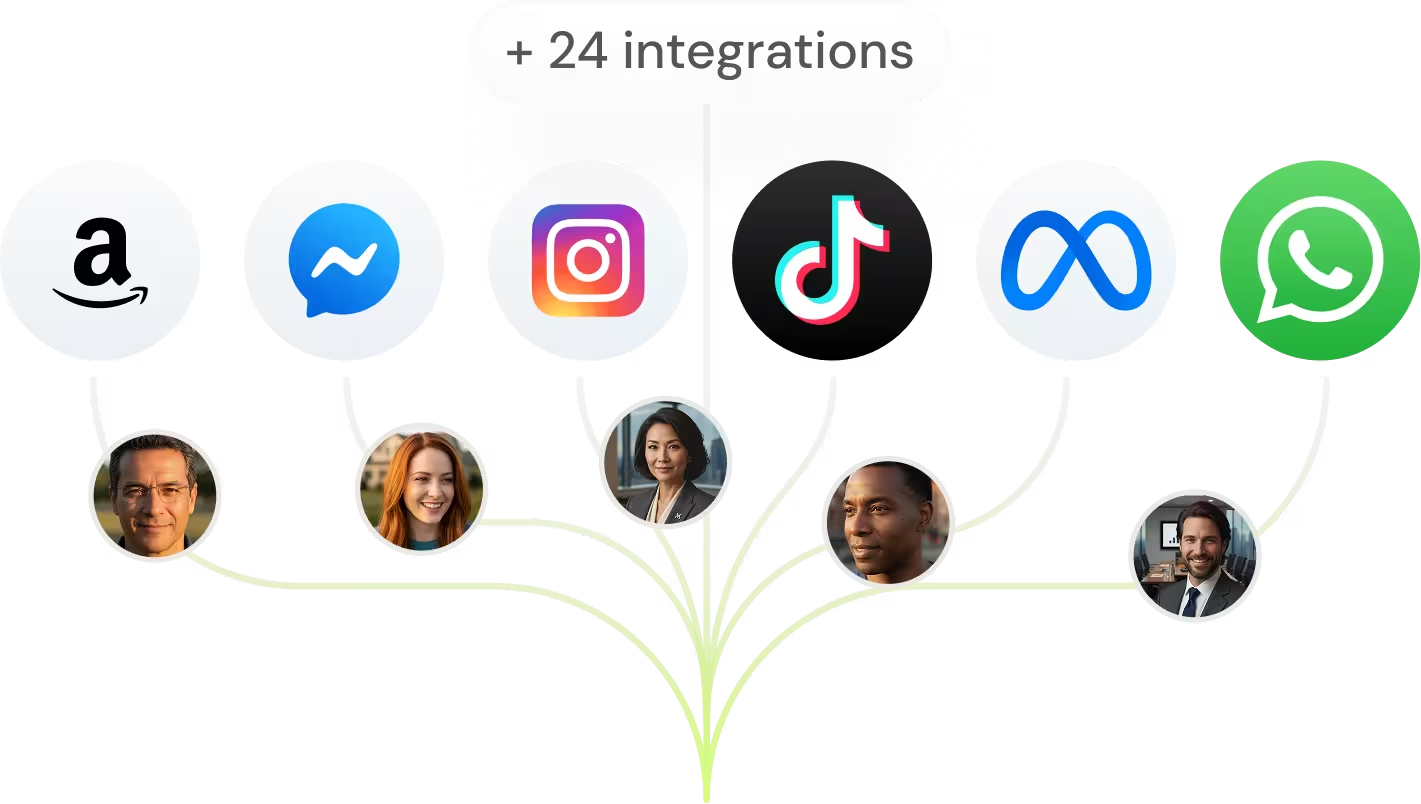
AI chatbots now sit on dealership websites, Facebook Messenger, WhatsApp, and SMS channels—answering questions about inventory, pricing, trade-in values, and financing 24 hours a day.
The sophistication has jumped dramatically. A modern AI assistant can:
- Quote a monthly payment estimate based on down payment and credit tier ranges
- Answer questions about specific VINs in stock, including features and availability
- Schedule test drives directly into your sales calendar
- Pre-qualify leads by asking about budget, timeline, and trade-in situation
- Transfer hot leads to live agents when a human touch is needed
All of these customer interactions get logged directly into CRM tools like VinSolutions, CDK, or Reynolds & Reynolds—so your sales teams have full context when they follow up.
Key tasks these AI-powered tools handle:
- Answering FAQs (hours, directions, inventory availability)
- Booking service and sales appointments
- Screening trade-in inquiries with initial value ranges
- Handling basic financing questions
- Routing complex inquiries to the right department
The goal isn’t to replace human salespeople—it’s to ensure no lead goes cold because someone couldn’t answer questions at midnight on a Tuesday.
Enhanced AI-Driven Sales and Marketing Strategies
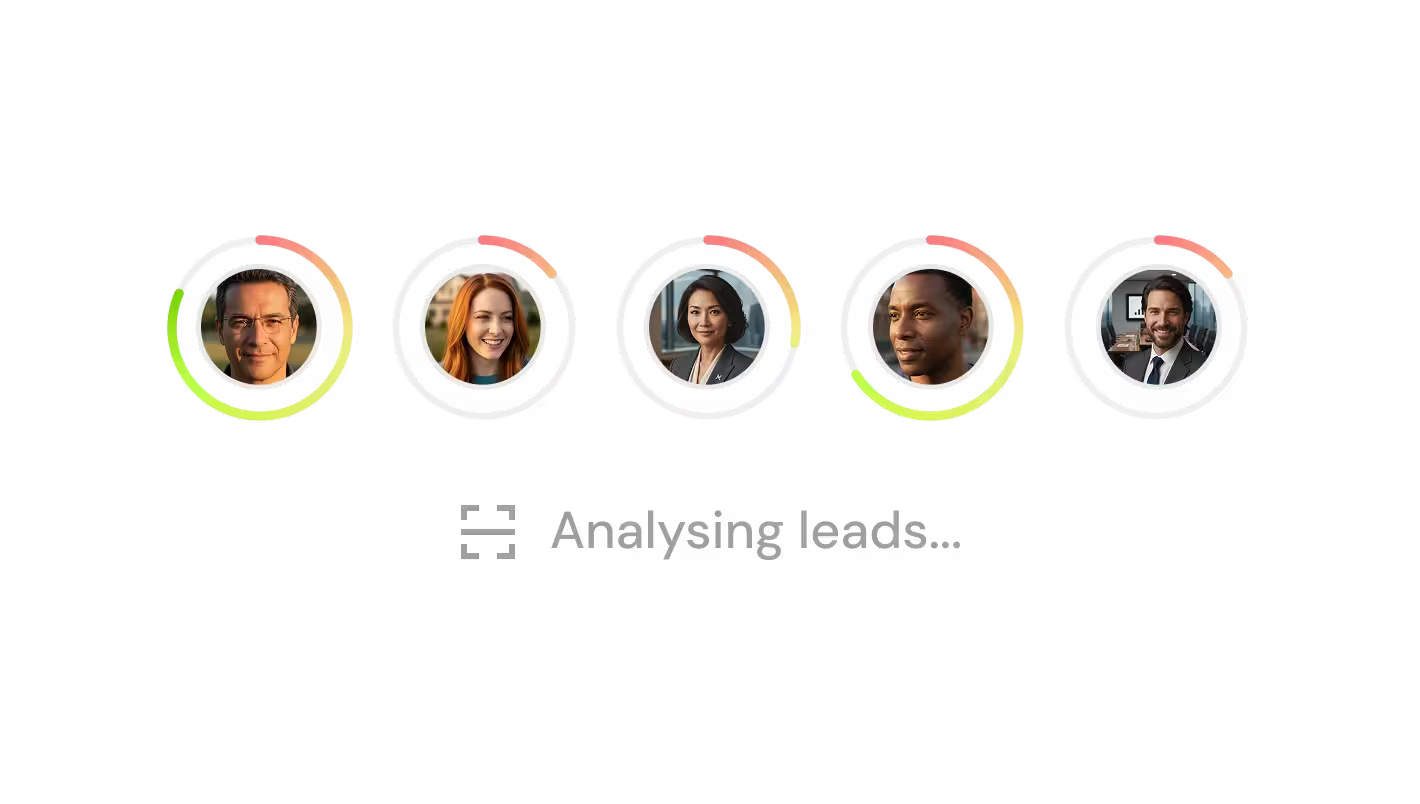
Predictive analytics takes the guesswork out of sales and marketing by scoring leads based on likelihood to buy within the next 30–60 days.
These AI systems analyse:
- Website browsing history (which models, how many page views, time spent)
- Email engagement (opens, clicks, replies)
- Past purchase and service patterns
- External data signals (lease maturity dates, loan payoff timing)
Based on this customer behaviour analysis, AI can anticipate customer intent and prioritise the right customers for your sales teams to focus on first.
On the marketing side, AI creates dynamic campaigns that respond to real-time conditions:
- When OEM incentives change on 2025 EVs, AI automatically updates email and ad copy to reflect new offers
- End-of-quarter clearance campaigns target only customers who’ve shown interest in models you need to move
- Hyper-targeted ad audiences pull from first-party data: in-market SUV shoppers, end-of-lease customers, or high-mileage service customers ripe for trade-in
These campaigns integrate with Google Ads Performance Max, Meta Ads, and OEM co-op programs, so you’re maximising every dollar of marketing spend.
Measurable outcomes include:
- Higher email open rates on personalised campaigns
- More showroom visits per marketing dollar
- Reduced marketing costs through the elimination of untargeted mass campaigns
- Clearer attribution connecting ad spend to actual car sales
Streamlined Operations, Service Scheduling, and Supply Chain Management
AI automates the repetitive admin work that eats up hours every week—appointment confirmations, no-show follow-ups, and routine customer updates.
Concrete examples:
- Auto-texting a reminder with a Google Maps link 24 hours before a service visit
- Automatically rescheduling missed appointments without requiring a phone call
- Sending video inspection links generated by service departments directly to customers
- Confirming parts availability before the customer arrives
AI-powered demand forecasting predicts service bay load on specific days—Mondays and Saturdays typically run heavy—and suggests staffing adjustments to match.
For parts and supply chain, AI helps service departments stock common parts for the top 20 models sold at your store since 2020, reducing the “we’ll have to order that” conversations that frustrate customers.
The internal benefits add up:
- Less phone tag between service advisors and customers
- Fewer manual emails and calendar juggling
- More consistent communication that improves customer experience
- Service advisors spending more time on high-value work like repair recommendations
AI-Powered Inventory and Pricing Optimisation
Managing inventory has always been part art, part science. AI tips the balance toward science by analysing multi-year sales history, OEM allocations, regional demand, and competitor pricing to recommend what to stock and at what price.
Practical scenarios:
- AI flags that 2024 sedans are moving slowly in your market and recommends reducing allocation requests while increasing orders for compact SUVs and EVs
- Dynamic pricing recommendations for used vehicles adjust based on days-in-inventory, local market days supply, and competing online listings
- Ageing units over 60–90 days automatically trigger markdown campaigns or bonus spiffs to salespeople
This approach to optimising inventory directly targets holding costs and floor space expenses. You may be able to reduce average days in inventory after deploying AI pricing tools.
The data backs up the ROI:
- Reduction in holding costs through smarter stocking
- Faster turn rates on both new and used inventory
- More capital available for in-demand models instead of tied up in unsold inventory
- Dynamic pricing that protects gross on desirable vehicles while moving slow sellers
All-in-One AI Solutions Tailored for Car Dealerships
Rather than stitching together five different point solutions, more dealer groups are opting for bundled AI platforms designed specifically for auto dealerships.
An “all-in-one” solution typically includes:
- AI sales agent for lead handling and qualification
- Webchat and virtual assistants for 24/7 customer engagement
- 360° imaging and photo automation tools
- Smart website personalisation layer
- Dashboard and analytics for performance tracking
The appeal is straightforward: fewer integrations to manage, unified customer data across touchpoints, and a single vendor relationship instead of juggling multiple contracts.
A multi-rooftop group, for example, might centralise AI tools across both new and used operations, ensuring a consistent customer experience and easier staff training across all locations.
AI Sales Agents and Lead Nurturing Engines
AI sales agents automatically respond to new leads from portals like Autotrader, Cars.com, and AutoScout24, as well as OEM campaigns and website forms.
A typical workflow looks like this:
- Lead comes in at 9 PM on a Wednesday
- AI agent responds within 60 seconds with a personalised message
- Agent qualifies the lead—asking about budget, timeline, and trade-in
- Agent offers specific VINs matching the customer’s preferences
- The agent books a showroom or video appointment directly in the calendar
- Conversation and lead status sync to CRM, alerting human sales reps
This approach drives measurable outcomes:
- Average first-response time under 1 minute
- Higher appointment booking rates before competitors can respond
- Sales teams focusing on ready buyers instead of cold outreach
The key framing here: AI sales agents are human-like but not human-replacing. They handle the initial heavy lifting so your sales teams can focus on relationship-building and closing deals.
360° Car Photography and Virtual Showroom Experiences
AI-powered 360° photography apps let staff capture full interior and exterior spins on a smartphone in under 10–15 minutes per vehicle.
Here’s the workflow:
- Capture: Lot porter or sales rep follows guided prompts on a mobile app
- AI processing: Background removal, stitching, and colour correction happen automatically
- Upload: Finished 360° views publish to dealer websites, classifieds, and OEM-certified platforms
No studios. No external photographers. No waiting days for edited photos.
These immersive views appear on vehicle detail pages (VDPs) across your digital presence, and the engagement difference is significant. Buyers spend more time interacting with 360° views than static photos, which correlates to higher lead conversion.
Practical benefits for the dealership:
- Vehicles listed online the same day they arrive
- Fewer days between arrival and the first customer inquiry
- Reduced photo-editing labour costs
- Consistent visual quality across all inventory
Car Photography Dashboards and Mobile Applications
A centralised dashboard lets managers see which units still need photos, which have incomplete spins, and which are already live online.
The mobile app experience for lot porters or sales staff includes:
- Guided capture flows with checklists (front, rear, interior, key options)
- Instant quality control feedback—flagging blurry images, missing angles, or non-compliant branding
- One-tap upload to website and portal integrations
This AI-powered automation dramatically reduces time-to-market. Vehicles get photographed and listed the same day they arrive, which is especially critical for in-demand models that buyers are actively searching for.
Compare this to traditional manual photo shoots: coordinating with photographers, waiting for editing, uploading files manually, and checking for errors. That process could take 3–5 days. With AI-driven tools, it’s same-day.
Key Business Benefits of AI for Car Dealerships
Beyond the technology itself, what matters is measurable business impact. Here’s how AI applications translate into actual results across sales, marketing, service, and operations.
Improved Efficiency and Reduced Manual Work
AI cuts manual tasks that used to consume hours every week:
- Data entry from lead forms into CRM
- Basic email follow-ups on aged leads
- Appointment reminder calls
- Answering repetitive inventory and pricing questions
Specific roles see direct impact:

For a mid-sized store selling 80–150 units per month, the time savings can equal 15–20+ hours per week—essentially freeing up half an FTE for higher-value work.
Higher Customer Satisfaction and Stronger Relationships
Instant answers via AI chat, transparent pricing tools, and proactive service reminders reduce friction throughout the car-buying experience.
Consider what the customer actually experiences:
- They submit a question at 11 PM and get a helpful response in under a minute
- They receive a text reminder 24 hours before their service appointment
- They can confirm or reschedule with a single tap
- They get a video inspection link showing exactly what work their car needs
This seamless experience shows up in metrics that matter:
- Higher CSI scores on OEM surveys
- Better Google review ratings
- Improved NPS from service and sales customers
- Stronger customer engagement and repeat purchase rates
When customers feel taken care of—not chased or forgotten—they become loyal buyers who refer friends and family.
Increased Sales, Gross, and Marketing ROI
AI improves lead quality, handling speed, and follow-up consistency—all of which drive sales.
High-intent signals get flagged automatically. If a customer views the same VIN three times in 48 hours, AI pushes that lead to the top of the sales queue. No more treating every lead equally when some are clearly ready to buy.
Targeted campaigns move ageing inventory while protecting gross on desirable models. Instead of discounting across the board, AI identifies which customers are most likely to respond to specific offers.
Marketing ROI improvements include:
- Lower cost per lead through better audience targeting
- Lower cost per sale by eliminating wasted ad spend
- More efficient use of paid search and social budgets
- Clearer attribution connecting campaigns to actual car sales
For dealerships watching every marketing dollar, this precision means selling more cars without proportionally increasing spend.
Lower Costs and Better Profitability
Cost savings come from multiple directions:
- Inventory optimisation: Avoiding overstocking slow sellers reduces flooring and holding costs
- Marketing efficiency: Cutting untargeted mass campaigns frees budget for what actually works
- Operational savings: Fewer hours on manual photo editing, scheduling calls, and data cleanup
- Error reduction: Cleaner data means fewer rework situations
One example: reducing average days-in-inventory from 65 to 50 on used vehicles directly reduces floor plan interest expense—potentially thousands of dollars per month for a typical store.
These savings compound across departments, contributing to better profitability in sales, F&I, and service.
Sustainable Competitive Advantage in Local Markets
Early AI adopters gain a competitive edge that compounds over time:
- Faster response to leads (minutes vs. hours)
- More relevant pricing based on real-time data
- Stronger online presence with better photos and content
- Improved customer experiences that generate reviews and referrals
Consider two neighbouring stores selling the same brand. One uses AI to respond to leads instantly and run personalised marketing campaigns. The other relies on manual processes and next-day callbacks. Over time, the AI-enabled dealership captures more market share simply by being faster and more relevant.
Importantly, AI enables smaller independents to compete with large groups by automating best-practice processes. You don’t need a massive team to operate like a sophisticated dealer—you need the right AI solutions.
OEMs increasingly expect dealers to meet digital and response-time benchmarks. Many of these standards become far easier to hit with AI handling the heavy lifting.
Challenges, Risks, and Practical Considerations
AI isn’t a magic switch. Implementations can fail without proper planning, clean data, and staff buy-in. A poorly trained chatbot that gives wrong vehicle availability creates angry customers—the opposite of what you’re trying to achieve.
Here’s what to watch for.
Data Privacy, Security, and Compliance
Dealerships handle sensitive information: personal details, financing applications, driver’s license scans, and service history. This data requires serious protection.
Key regulations in 2025:
- GDPR in the EU
- CCPA/CPRA in California
- Emerging state-level data privacy laws across the US
- OEM data-sharing policies and requirements
What your AI deployment needs:
- Encryption for data at rest and in transit
- Secure APIs with proper authentication
- Role-based access controls
- Clear data-processing agreements with AI vendors
- Opt-out mechanisms for marketing automation and AI-driven profiling
Partner with vendors that regularly audit security and comply with industry standards—not just vendors who claim to be “secure” without specifics. Ask for SOC 2 reports and documented compliance practices.
Workforce Reskilling, Culture, and Job Impact
There’s legitimate concern that AI will replace salespeople, BDC agents, or service advisors. The reality: AI primarily automates repetitive tasks, not relationships.
New responsibilities emerge:
- Overseeing AI campaigns and reviewing performance analytics
- Stepping in when complex customer issues arise
- Using AI-generated insights to prioritise daily activities
- Quality-checking AI responses and providing feedback
Training matters. Short courses on AI tools, playbooks for using AI responses as templates, and clear KPIs for blended human+AI teams help staff adapt.
For morale, involve staff in tool selection and pilot programs. Show them how AI supports their success—more appointments, easier follow-ups, better leads—rather than threatening their jobs.
Technology Integration and Change Management
Connecting AI tools with existing CRM, DMS, website platforms, and OEM systems without creating data silos is a real challenge.
Clean data is essential. Accurate customer records and proper deduplication are prerequisites for AI recommendations you can actually trust. Garbage in, garbage out.
Implementation recommendations:
- Phased rollouts: Start with one or two use cases (webchat + automated scheduling) before expanding to inventory and pricing AI
- Clear KPIs: Set measurable goals for pilots—response time, appointment rate, sales conversion rates, CSI scores
- Monthly reviews: Assess results regularly and adjust before expanding
- Vendor accountability: Ensure your AI providers offer integration support, not just software
Rushing a full-scale rollout without testing creates more problems than it solves.
The Future of AI in Car Dealerships
Looking 3–5 years ahead, the trends visible point to several developments:
- Deeper EV-specific analytics: AI that understands EV buyer behaviour, charging patterns, and maintenance differences
- AI-assisted F&I presentations: Menu selling guided by AI that predicts which products each customer is most likely to value
- Advanced visual damage detection: AI that scans trade-ins and identifies repair needs from photos
- Seamless digital retailing: End-to-end buying experiences from home to showroom, with AI handling handoffs
The industry is also watching how AI will support direct-to-consumer models and agency sales structures. Even in these models, dealers who add genuine value through AI-enabled dealers' expertise, local service, and relationship-building will remain essential.
Multimodal AI—combining text, voice, and images—will shape future customer journeys. Think video-based trade appraisals where customers record their vehicle, and AI provides instant estimates, or voice assistants in vehicles that connect customers directly to service scheduling.
For autonomous vehicle sales and the rise of self-driving cars, dealers who understand these technologies will be better positioned to advise customers navigating new buying decisions.
The dealers who stay ahead will treat AI as an evolving capability, not a one-time purchase.
Conclusion: Building an AI Roadmap for Your Dealership
AI for car dealerships isn’t about chasing hype—it’s about meeting customer expectations, improving operational efficiency, and maintaining a competitive position in a fast-moving market.
Here’s a simple, staged roadmap:
- Assess current state: Audit your data quality, existing tools, and integration capabilities
- Choose 1–2 pilot use cases: Start with visible, low-risk wins like AI webchat, automated scheduling, or 360° photography
- Train your team: Ensure staff understand how to work alongside AI tools and monitor results
- Measure and iterate: Track KPIs monthly, identify what’s working, and adjust before expanding
- Scale thoughtfully: Add complexity (pricing AI, predictive marketing) once fundamentals are solid
The game changer isn’t the most sophisticated AI—it’s the AI that actually gets implemented and used. Start with what drives immediate value and build from there.
AI adoption should be treated as an ongoing capability, with regular optimisation, governance reviews, and vendor accountability. The market won’t wait for dealers who delay.
Set a specific target: by next quarter, have your core AI use cases live and generating measurable results. The dealerships that move now will be the ones setting the pace in their local markets for years to come.
Ready to transform your automotive lead generation? Driftrock powers lead generation for 65% of the automotive industry, helping 80+ brands across 24 markets generate over 1.7 million leads annually and enable £1.8 billion in vehicle sales. Our platform automatically validates leads, routes them to the right dealers, and tracks performance from click to sale, saving marketing teams an average of 3 years and 11 months in time whilst cutting costs by up to 50%.
Whether you're looking to increase lead volume, improve conversion rates, or prove ROI, we've built the tools automotive marketers actually need. Book a demo to see how we can help you drive better results from your marketing spend.